T-Shirt Yarn vs Cotton Yarn: Which Is Right for Your Project?
von
BATELOYARN
19 Sep 2026
Sometimes the best yarn choice becomes clear the moment you imagine the finished object in your hands. Do you want bold, visible stitches and a substantial shape? Or a finer fabric with more room for delicate detail?
That is the useful starting point when comparing T-shirt yarn with conventional cotton yarn. The choice is not about which one is better. It is about which construction helps your project become what you want it to be.
There is also an important nuance: these categories can overlap. A T-shirt-style yarn may contain cotton, while “cotton yarn” usually refers to yarn spun or otherwise formed into a more conventional strand. Always verify the stated composition and construction of the exact products you are comparing.
The Main Difference Is Construction
T-shirt yarn is fabric-like: a broad strip or tube rather than a familiar fine strand. Conventional cotton yarn is generally narrower and may be made in many weights and constructions.
That physical difference influences nearly everything that follows:
- How the yarn feels in your hand
- How large and visible each stitch appears
- How quickly the fabric gains thickness and weight
- Which tools and patterns are appropriate
- How the finished piece bends, drapes, or holds shape
Composition still matters for care and performance, but the form of the strand is what creates the immediate visual contrast.
Stitch Scale and Visual Texture
T-shirt yarn makes the path of each stitch easy to see. The fabric can feel graphic and sculptural, even in a basic crochet stitch. This is helpful when texture is part of the design: a basket on an open shelf, a bold tote, or a simple home accent.
Conventional cotton yarn can support a broader range of fine detail, depending on its weight and construction. Smaller stitches make room for intricate motifs, lightweight layers, and more gradual shaping.
Choose T-shirt yarn when you want the stitch itself to have presence. Choose a conventional cotton yarn when the design depends on finer detail or a lighter scale—and always confirm the pattern’s yarn requirements.
Structure, Drape, and Stretch
Neither category has one fixed behavior. T-shirt yarns differ in elasticity and firmness. Cotton yarns also vary by spin, ply, weight, blend, and treatment.
Still, the broad T-shirt-yarn strand often creates a thicker fabric, while a conventional cotton yarn can create a finer one. Whether that fabric is stable, stretchy, soft, or firm depends on the exact yarn, tool size, stitch, and tension.
Make a swatch and ask:
- Does it stand when the project needs structure?
- Does it fold when the project needs flexibility?
- Does it recover after gentle stretching?
- Are the spaces between stitches appropriate for the use?
- Is the fabric comfortable to make and handle?
Let the sample answer instead of relying on the fiber name alone.
Comfort While Making
T-shirt yarn asks for larger movements and may feel more demanding during a long session. Its weight also becomes more noticeable as a project grows. Supporting the work on a table or in your lap and taking regular breaks can help.
A finer cotton yarn uses smaller movements but may require many more stitches to cover the same visual area. Some makers find that rhythm relaxing; others prefer the visible progress of a larger strand.
The right yarn supports both the project and your body. If a material or technique causes pain, stop and reconsider the tool, tension, session length, or project.
Baskets and Structured Storage
T-shirt yarn is a natural candidate for baskets because it creates a substantial fabric and strongly defined stitches. But yarn alone does not guarantee an upright basket. Size, base construction, stitch choice, tool, tension, and any structural elements all matter.
Conventional cotton yarn can also be used for baskets when a pattern is designed for it, sometimes with strands held together or with a specific construction. Do not substitute one category for the other without swatching and recalculating; the stitch count, gauge, amount, and finished behavior may change significantly.
Bags and Accessories
For a statement tote or compact pouch, T-shirt yarn can create bold texture and a clear silhouette. Account for the finished weight and potential stretch, especially in handles and straps.
Conventional cotton yarn may be better suited to a lighter fabric, finer stitch pattern, or detailed motif. Again, the exact result depends on the yarn and pattern rather than the word “cotton.”
For either material, use a design appropriate for what the bag will carry. Secure hardware carefully, consider lining when the pattern recommends it, and test the finished piece gradually.
Home Décor and Everyday Objects
T-shirt yarn works well when you want a handmade object to have visible texture: a catchall, plant-pot cover, table accent, or decorative vessel. The broad stitches can soften hard surfaces and make a neutral color feel rich rather than plain.
Conventional cotton yarn offers a different vocabulary. It can create detailed covers, cloths, lace-like surfaces, and lighter decorative elements, depending on the pattern and specific yarn.
For items exposed to heat, moisture, food, children, or pets, choose yarn and a pattern explicitly appropriate to that use. Fiber assumptions are not a substitute for product care and safety information.
Color and Finish
Color behaves differently at different stitch scales. In T-shirt yarn, one shade occupies a larger visual area, so a strong color can become the focus and a quiet neutral can highlight texture. With finer cotton yarn, multiple colors and detailed motifs can be combined on a smaller scale.
Before deciding, place the yarn near the intended room, outfit, or object. View it in the light where it will live. A useful color is not only attractive in the ball; it belongs in the finished piece’s everyday setting.
Care and Longevity
Do not assume care instructions from the yarn category. Read the label for the exact product and follow it throughout making, finishing, and use.
Think about how the object will age. Will it be frequently handled? Does it need to be cleaned often? Will it sit in direct light? Is it likely to stretch under weight? Your project may be better served by a different yarn, construction, or location if the care requirements do not fit real life.
A Simple Decision Guide
Choose T-shirt yarn when:
- You want large, visible stitches.
- The project benefits from a substantial, tactile fabric.
- A simple stitch should carry much of the design.
- You are following a pattern written for T-shirt yarn.
Consider conventional cotton yarn when:
- You want finer detail or a lighter scale.
- The pattern calls for a conventional yarn construction.
- The project needs more stitches within a smaller area.
- You prefer the making rhythm of a narrower strand.
In either case, confirm composition, care, amount, and tool guidance for the specific product. Then swatch.
Choose the Feeling You Want to Make
The final decision is both practical and personal. Think about the object’s job, then the experience you want while creating it. A good material choice makes those two things meet.
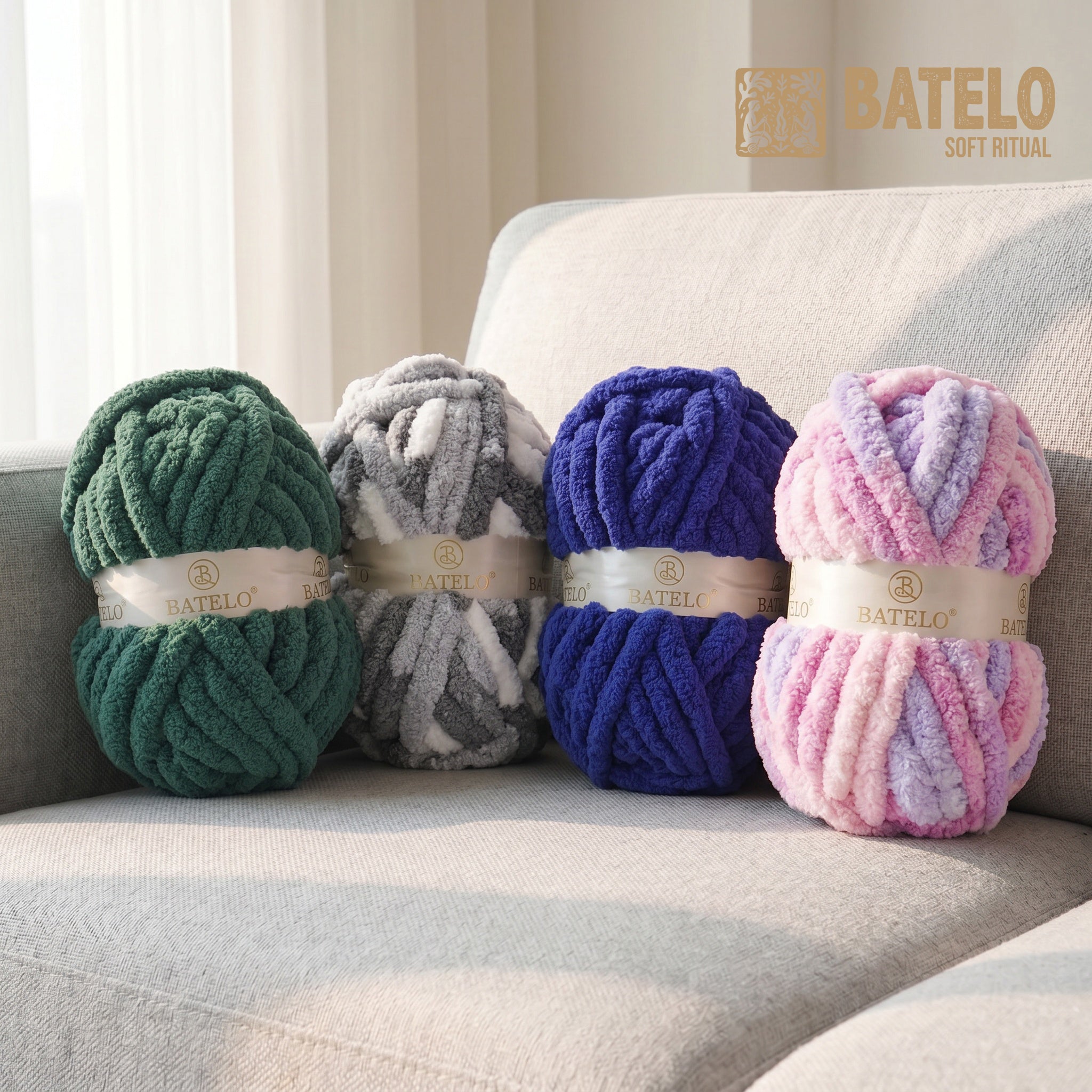
Explore BATELO T-shirt yarn when your project calls for bold texture, visible progress, and an everyday object with presence. Pair it with a BATELO pattern designed for the material, and let every stitch make warmth tangible.
Sample Block Quote
Praesent vestibulum congue tellus at fringilla. Curabitur vitae semper sem, eu convallis est. Cras felis nunc commodo eu convallis vitae interdum non nisl. Maecenas ac est sit amet augue pharetra convallis.
Sample Paragraph Text
Praesent vestibulum congue tellus at fringilla. Curabitur vitae semper sem, eu convallis est. Cras felis nunc commodo eu convallis vitae interdum non nisl. Maecenas ac est sit amet augue pharetra convallis nec danos dui. Cras suscipit quam et turpis eleifend vitae malesuada magna congue. Damus id ullamcorper neque. Sed vitae mi a mi pretium aliquet ac sed elitos. Pellentesque nulla eros accumsan quis justo at tincidunt lobortis deli denimes, suspendisse vestibulum lectus in lectus volutpate.